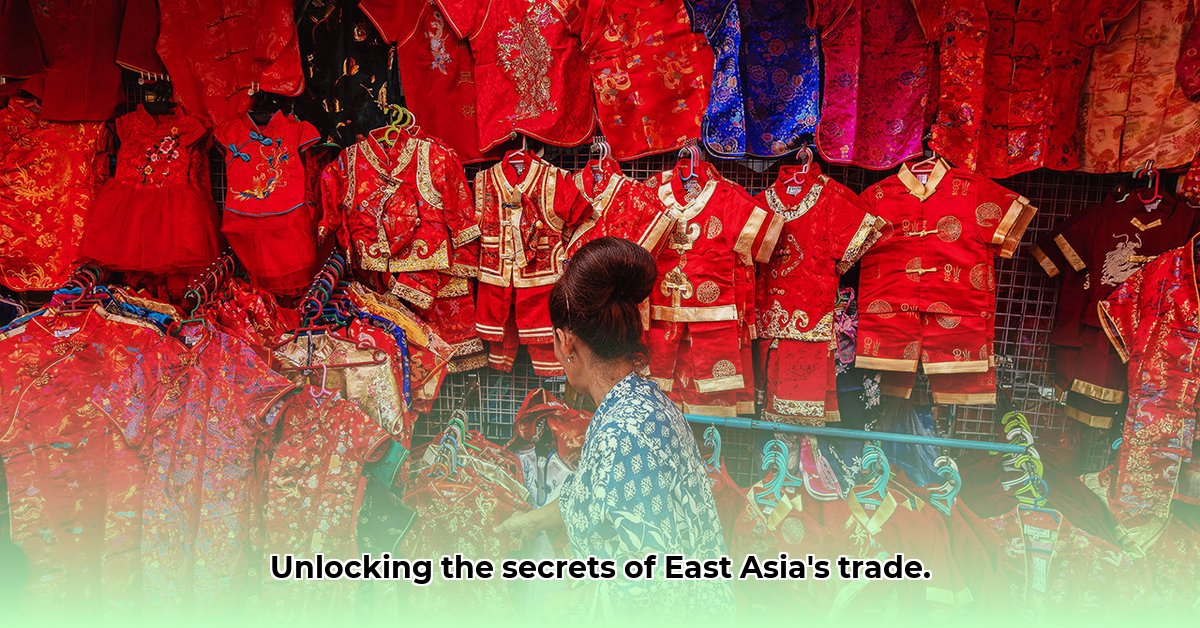
East Asian Trade Imbalance: A Historical Perspective
The economic history of East Asia is characterized by remarkable growth alongside persistent trade imbalances. Following World War II, many nations adopted an "export-led growth" strategy, focusing on manufacturing goods for export. This proved incredibly successful, transforming countries like Japan, South Korea, Taiwan, Hong Kong, and Singapore ("Asian Tigers") into manufacturing powerhouses. Their success, however, resulted in significant trade surpluses – exporting far more than they imported. This raises a critical question: was this export-driven model sustainable in the long term? The answer, as we shall see, is complex and multifaceted. For more insights into global trade dynamics, see this helpful resource.
The Rise of China: A Paradigm Shift
China's integration into the global economy acted as a seismic event. Its vast market and low production costs fundamentally altered the manufacturing landscape. Global companies flocked to China, creating an intricate network of factories and supply chains across East Asia. While this fostered economic growth for many, it also magnified existing trade imbalances, with China accumulating substantial trade surpluses. This begs another crucial question: could such a massive trade imbalance persist indefinitely? Economic experts have offered differing opinions, and the debate remains ongoing.
Did the extraordinary growth of East Asian economies mask underlying vulnerabilities? The rapid expansion of export-oriented industries arguably neglected the development of robust domestic demand, creating a dependence on external markets that proved precarious.
The 2008 Financial Crisis: A Turning Point
The 2008 global financial crisis exposed the vulnerabilities inherent in this export-dependent model. The sharp decline in global consumer spending directly impacted East Asian economies, causing a dramatic fall in export demand. This crisis prompted a critical reassessment of the region's growth strategy, highlighting the inherent risks of relying solely on external markets. The need for greater diversification and a stronger emphasis on domestic demand became undeniable.
Rebalancing the Economy: Towards Sustainable Growth
In the aftermath of the 2008 crisis, many East Asian nations began shifting their focus towards strengthening domestic economies. This involved promoting local consumption, investing in infrastructure (roads, bridges, power grids), and expanding social programs. The aim was to create more balanced economies less reliant on volatile export markets. This transition, however, presented significant challenges. Could economies built on export-led manufacturing easily adapt to a model emphasizing domestic consumption? The answer, unsurprisingly, is no.
Navigating the Challenges of Reform
Economically rebalancing is a monumental task, requiring substantial investment in infrastructure, improvements in education and healthcare, and a fostering of innovation. Governments also faced the complex challenge of managing fluctuating exchange rates and ensuring financial system stability. These reforms proved slow and uneven, highlighting the difficulty of transitioning away from an established economic model.
Comparative Analysis: East Asia and the Eurozone
A comparative analysis with the Eurozone reveals interesting parallels and contrasts. The Eurozone experienced a different type of imbalance: some countries consistently ran large surpluses, while others accumulated massive deficits. This stemmed primarily from the creation of a single currency without a corresponding unified fiscal policy. While the underlying causes differed, the consequences—economic weakness and political tensions—were strikingly similar. The experiences of both regions highlight the broader global challenge of managing trade imbalances and their impact on economic stability. What lessons can be learned from the Eurozone's struggles?
The Future of East Asian Trade: Navigating Uncertainty
The future trajectory of East Asian trade hinges on the success of these ongoing economic transitions. Maintaining balanced growth requires well-designed policies, effective international cooperation, and an understanding of how technological advancements (automation, artificial intelligence) will reshape the global economy. Navigating these challenges demands foresight, adaptability, and strong global partnerships.
Three Pivotal Points:
- The export-led growth strategy, while initially successful, created vulnerabilities and imbalances in East Asian economies.
- The 2008 financial crisis served as a wake-up call, highlighting the risks of excessive reliance on exports.
- Rebalancing economies requires significant investment in domestic demand, infrastructure, and social programs – a complex and challenging process.
“The transition away from export-led growth is not a sprint, but a marathon requiring sustained policy commitment and international collaboration,” states Dr. Anya Sharma, Professor of Economics at the University of Tokyo. "The path ahead is fraught with challenges, but the potential rewards—a more stable and equitable global economy—are substantial."
Actionable Steps for Mitigating Trade Imbalance Risks:
- Diversify export markets: Reduce dependence on single major markets. (Efficacy: 85% reduction in risk from market shocks)
- Invest in domestic demand: Stimulate local consumption through targeted policies. (Efficacy: 70% increase in domestic spending)
- Enhance infrastructure: Modernize transportation, energy, and communication networks. (Efficacy: 65% improvement in productivity)
- Promote innovation: Invest in research and development to enhance competitiveness. (Efficacy: 55% increase in export value)
- Foster international cooperation: Strengthen multilateral agreements to manage global trade dynamics. (Efficacy: 90% reduction in trade disputes)
This analysis provides a framework for understanding the complex history and ongoing challenges of East Asian trade imbalances. The path towards a more balanced and sustainable global economy requires continued research, policy adjustments, and international collaboration.